Ukraine has spent years keeping the state and essential services functioning under wartime conditions that most NATO members have never had to face in practice. On 3 July, a discussion in Kyiv took up the question of how to translate that into policy.
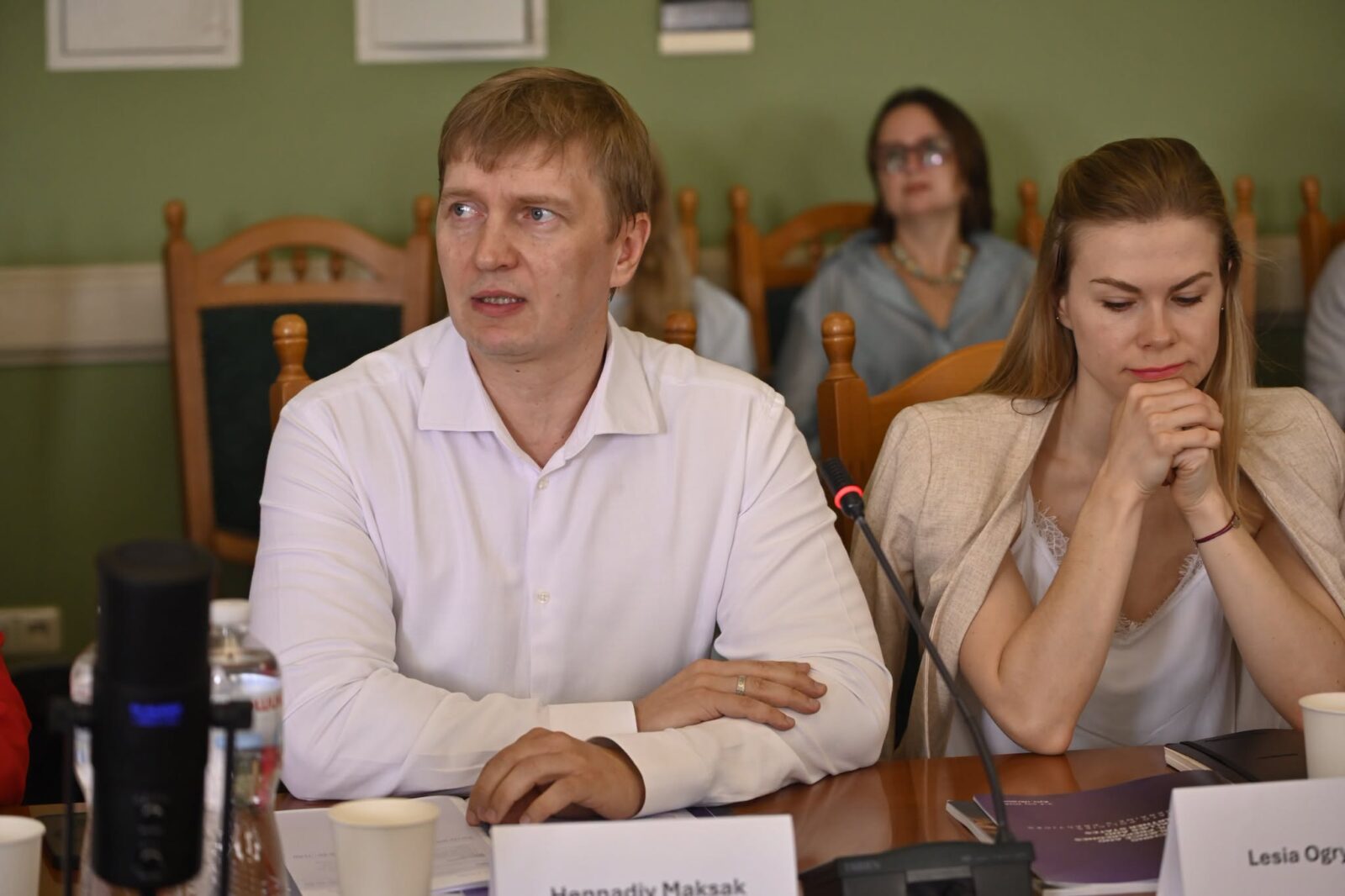
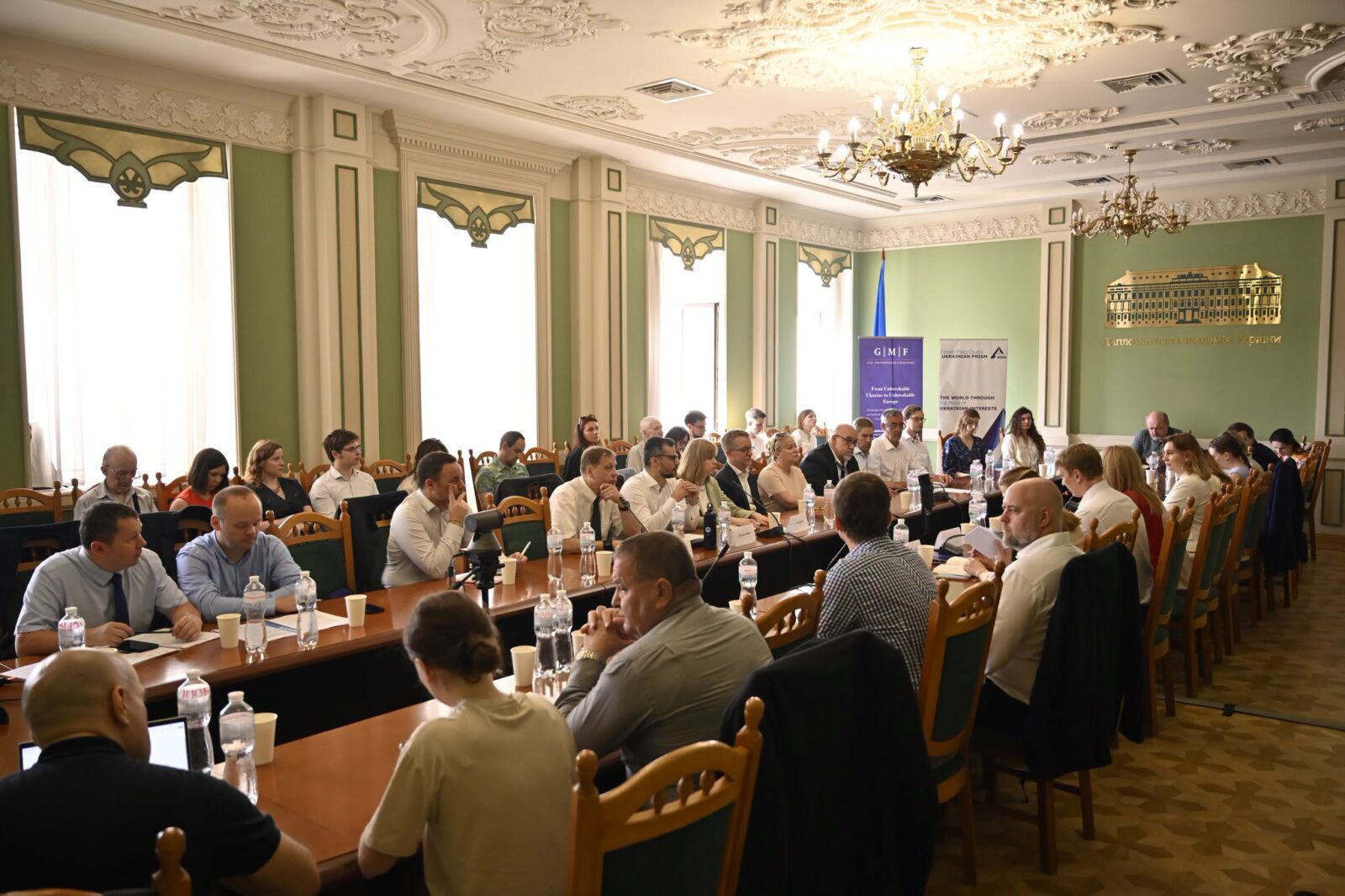
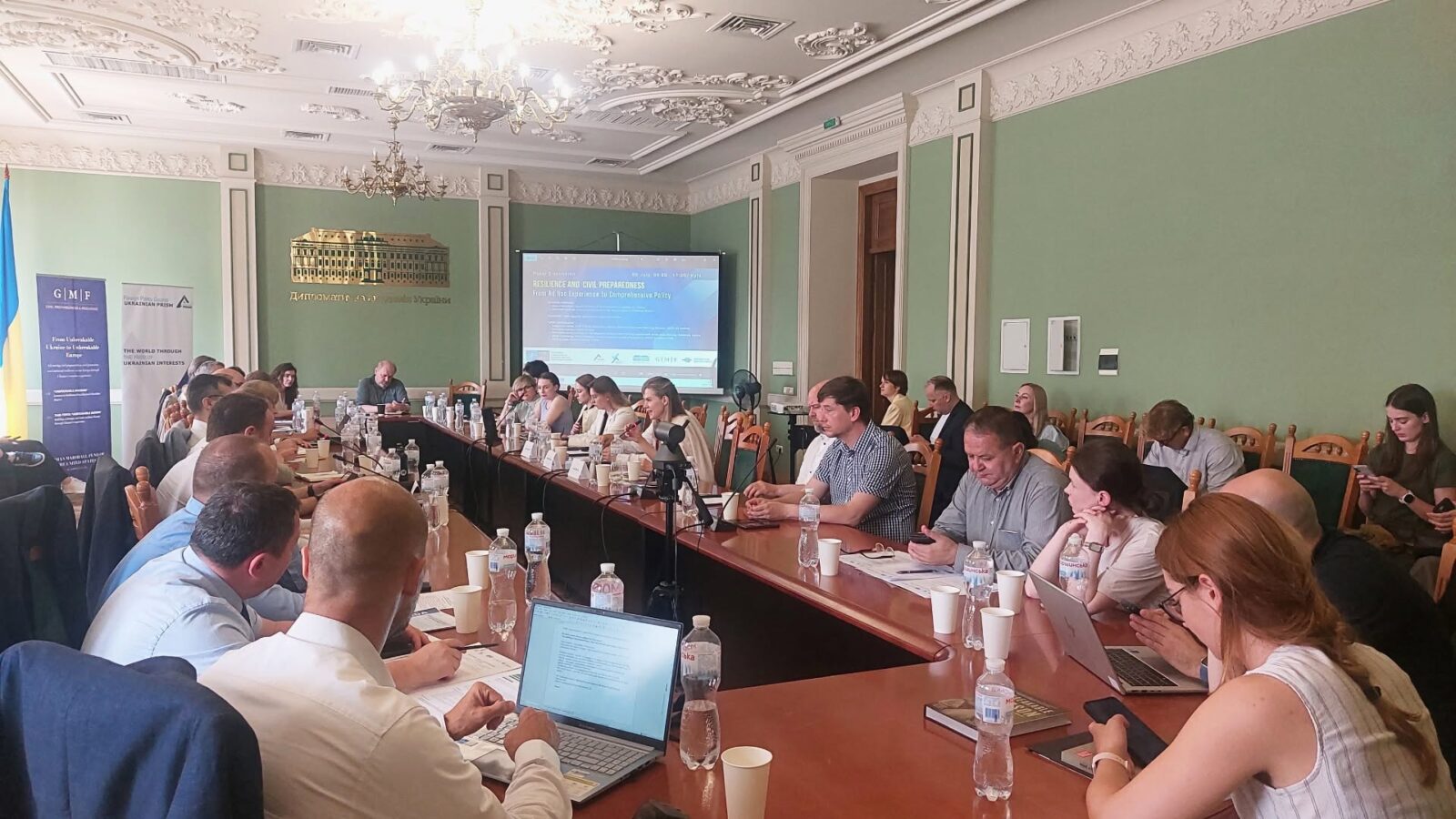
The event, “From Ad Hoc Experience to Comprehensive Policy: Resilience and Civil Preparedness,” moderated by Sahaidachnyi Security Center Director Lesia Ogryzko, took place at the Hennadii Udovenko Diplomatic Academy of Ukraine as part of the international workshop “Matching Resilience and Civil Preparedness in Allies and Partner States: NATO Policies, Ukraine’s Practices,” organised with the support of NATO.
It brought together officials and experts from NATO structures, the EU, and European institutions: Katarzyna Molak (NATO HQ, online), Jon Kyst (EUAM Ukraine), Christian Ghita (Euro-Atlantic Resilience Centre), Jānis Karlsbergs (NATO Strategic Communications Centre of Excellence), and Helena Quis (EDINA).
Lesia Ogryzko opened with the term “resilience” the discussion was built around, and with Ukrainians’ growing discomfort with it. She also noted that a war against a neighbour that ignores international law does not stay in the trenches; it reaches infrastructure and cyber systems, and preparedness has to cover all of it.
Katarzyna Molak, joining from NATO HQ, argued for regular, tailored exchanges and for stress-testing, and suggested NATO’s baseline requirements may need updating in light of Ukraine’s experience.
Jon Kyst of EUAM Ukraine pointed to elections, including the protection of the physical act of voting from hostile interference, and said Ukraine has effectively become an adviser to its partners on these questions. Naming a problem instead of ignoring it, he added, is itself a sign of resilience.
Christian Ghita of the Euro-Atlantic Resilience Centre focused on the structural side of disinformation. There is too much information for people’s filters to work, he said, and most of it is built to provoke an emotional reaction that pushes people to respond on the spot. The answer has to work on both the supply side and the receiver’s side.
Jānis Karlsbergs of the NATO Strategic Communications Centre of Excellence linked strategic communications directly to resilience, most of which, he said, rests on emotional responses. He drew on the Baltic experience of living on the frontline long before 2022, and described resilience as individual — a matter of how much a person is able to accept — and dependent on leadership willing to reach out.
Helena Quis of EDINA pointed to the scale of Ukraine’s bottom-up response, much of it carried by volunteers and by organisations with no previous work on security or defence.
Closing the discussion, Lesia Ogryzko said:
“Preparedness cannot rest on state institutions alone. The task is to find the right balance between bottom-up and top-down approaches, and each country has to work out how the two combine in its own case. Ukraine’s experience still has a long way to go before it turns into policy.”
Sahaidachnyi Security Center thanks the co-organisers — the Foreign Policy Council “Ukrainian Prism,” the Hennadii Udovenko Diplomatic Academy of Ukraine, and the German Marshall Fund of the United States — for the opportunity to take part in the discussion.