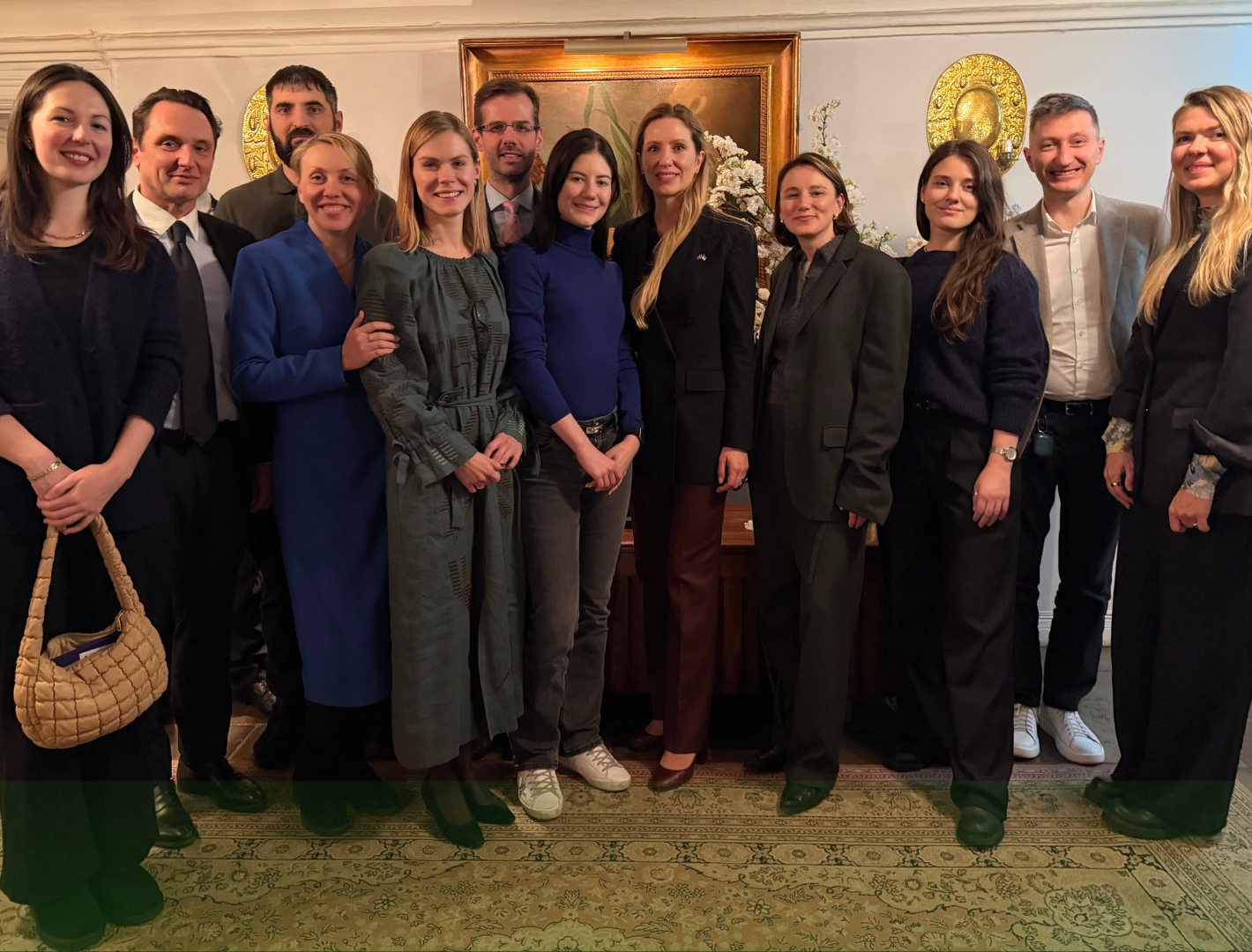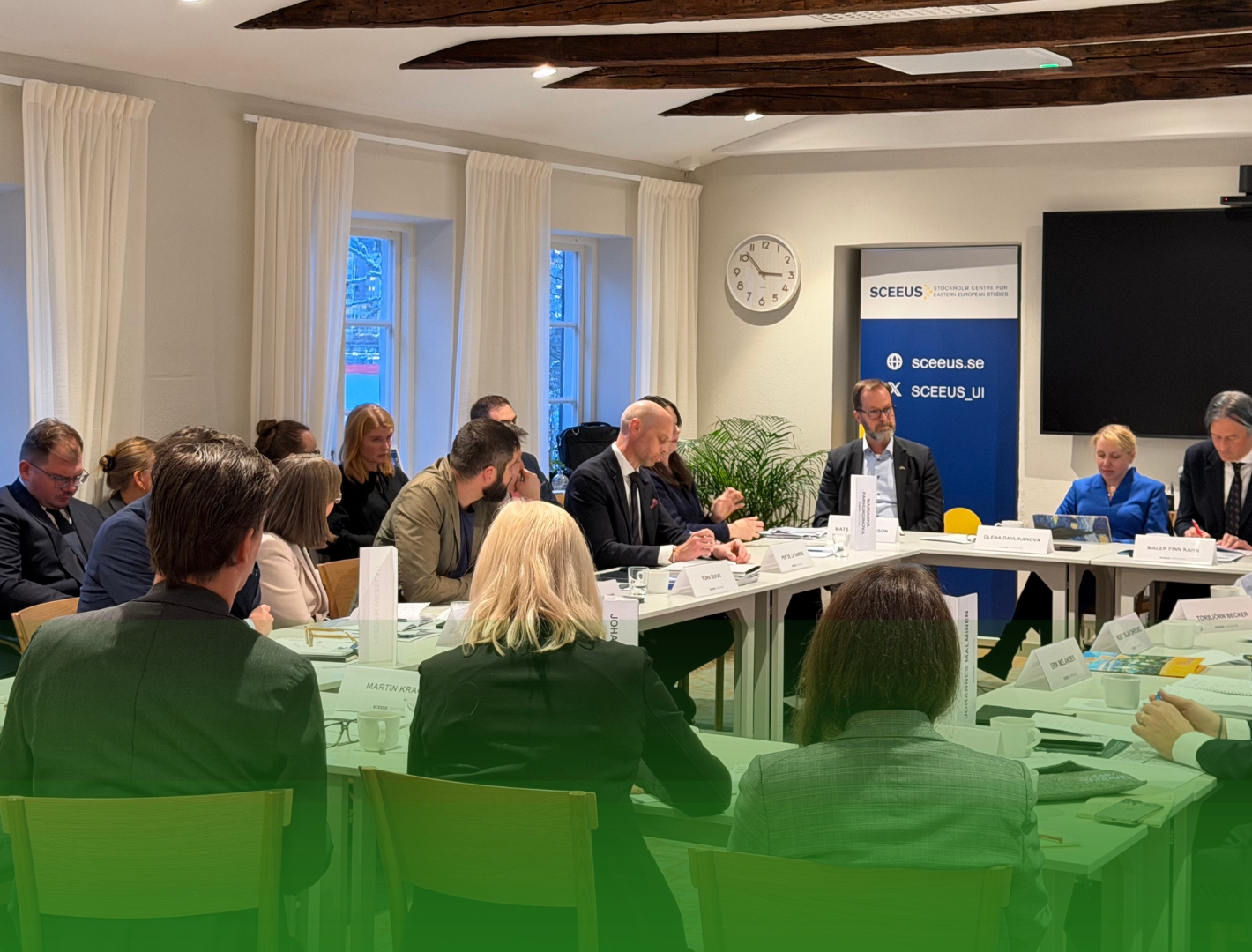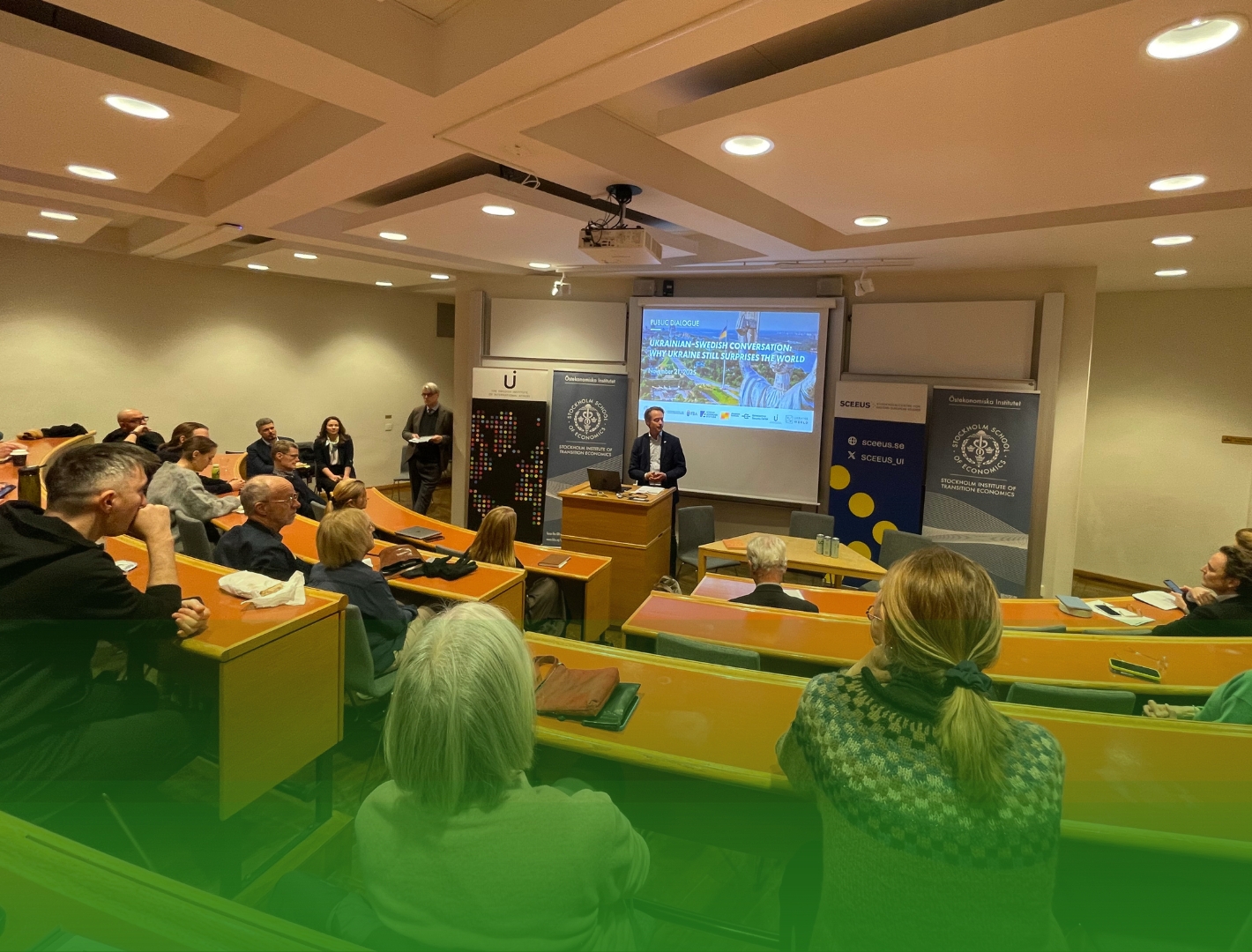
On 20–21 November, Stockholm became a key platform for strengthening Ukrainian–Swedish cooperation in the field of security and defence. The city hosted the first stage of an advocacy mission within the project “North–South Axis: Ukraine–NB8,” organised by the Sahaidachnyi Security Center and the Ukrainian Institute with the support of the International Renaissance Foundation. Swedish partners included SCEEUS, Konrad-Adenauer-Stiftung, and the Folke Bernadotte Academy.
The forum, titled “North–South. Security: Ukrainian–Swedish Total Defence Initiative Forum in Stockholm,” brought together defence, diplomatic, and expert institutions from Ukraine and Sweden. The core themes included strengthening defence partnership; the development of drone and AI technologies; comparison of national resilience models; and analysis of scenarios of Russian threats in the coming years.
The Ukrainian delegation comprised government officials and expert voices from the defence ecosystem: Serhii Shutenko (Ministry of Foreign Affairs of Ukraine), Rostyslav Ogryzko (Secretariat of the Cabinet of Ministers of Ukraine), Ivan Nahorniak (Office of the Deputy Prime Minister for European Integration; Ministry of Defence of Ukraine), Oleksandra Azarkhina (Economic Security Council of Ukraine; We Build Ukraine think tank), Lesia Ogryzko (Sahaidachnyi Security Center; Ministry of Defence Change Support Office), Kateryna Mykhalko (Technological Forces of Ukraine), Volodymyr Yermolenko (PEN Ukraine, UkraineWorld), Stanislav Boiko (MoD Change Support Office), Ihor Dvoretskyi (Armed Forces of Ukraine), Marta Bakhtiiarova (Kyiv School of Economics), Marianna Fakhurdinova (Transatlantic Dialogue Center), Yurii Buhai (MoD Change Support Office), and Maryna Trattner (researcher and journalist). Each of them works at the intersection of defence policy, strategic planning, and international cooperation.
The first panel was based on the Center’s research “Russia 2032 Scenarios: A Decade Post Full-Scale Invasion of Ukraine” and focused on future transformations within the Russian Federation and their implications for European security. The second thematic panel addressed drones, AI, and new logistics — areas where Ukraine’s battlefield experience is shaping contemporary defence standards. Barriers to cooperation were also discussed, including the challenges Swedish institutions face in quickly identifying suitable Ukrainian partners.
The second day focused on resilience, the Total Defence concept, and strengthening defence cooperation in both bilateral and multilateral formats. Drawing on the studies “Civil Society Role in Ukrainian Defence” and “Coping Under Fire,” participants analysed how volunteer networks, local communities, and municipal authorities ensured Ukraine’s resilience in the first months of the invasion, and how this experience could be integrated into Sweden’s total defence model.
Separate attention was given to scenarios of potential aggression against other European countries, as well as to NB8 and NATO mechanisms, taking into account Ukraine’s combat experience. An important component of the mission was a public dialogue among intellectuals on a shared European future and the role of culture in shaping Ukraine’s societal resilience during wartime. The discussion featured philosopher and President of PEN Ukraine Volodymyr Yermolenko and researcher Maryna Trattner, and was moderated by Stefan Ingvarsson, an analyst at the Stockholm Centre for Eastern European Studies (SCEEUS).
Both closed-door and public discussions brought together relevant Swedish stakeholders, including representatives of the Ministry for Foreign Affairs, the Ministry of Defence and its agencies, the Armed Forces, academic institutions, and analytical centers.
The forum marked an important step toward building a shared security platform and opened new opportunities for deepening defence and technological cooperation between Ukraine and Sweden.