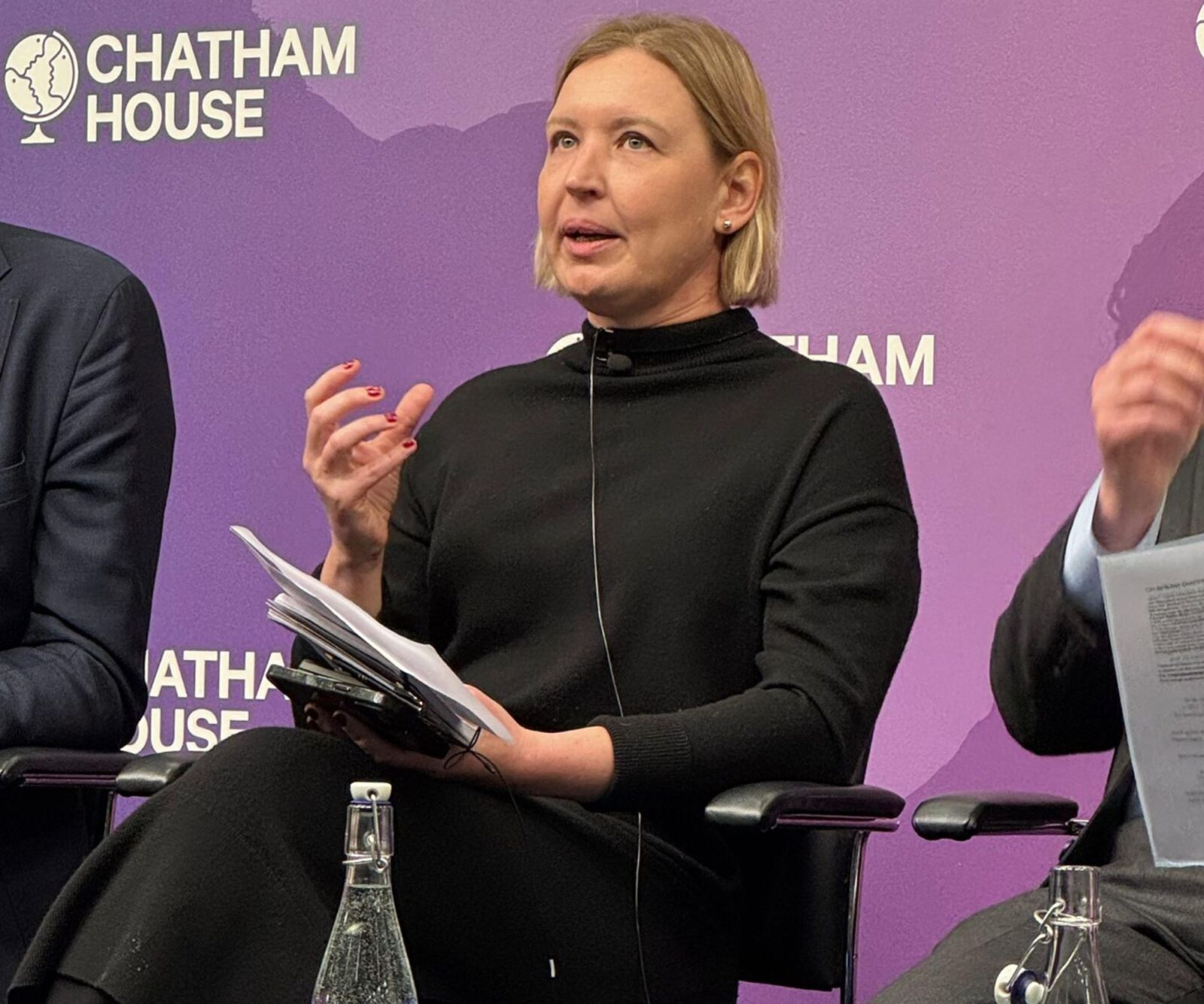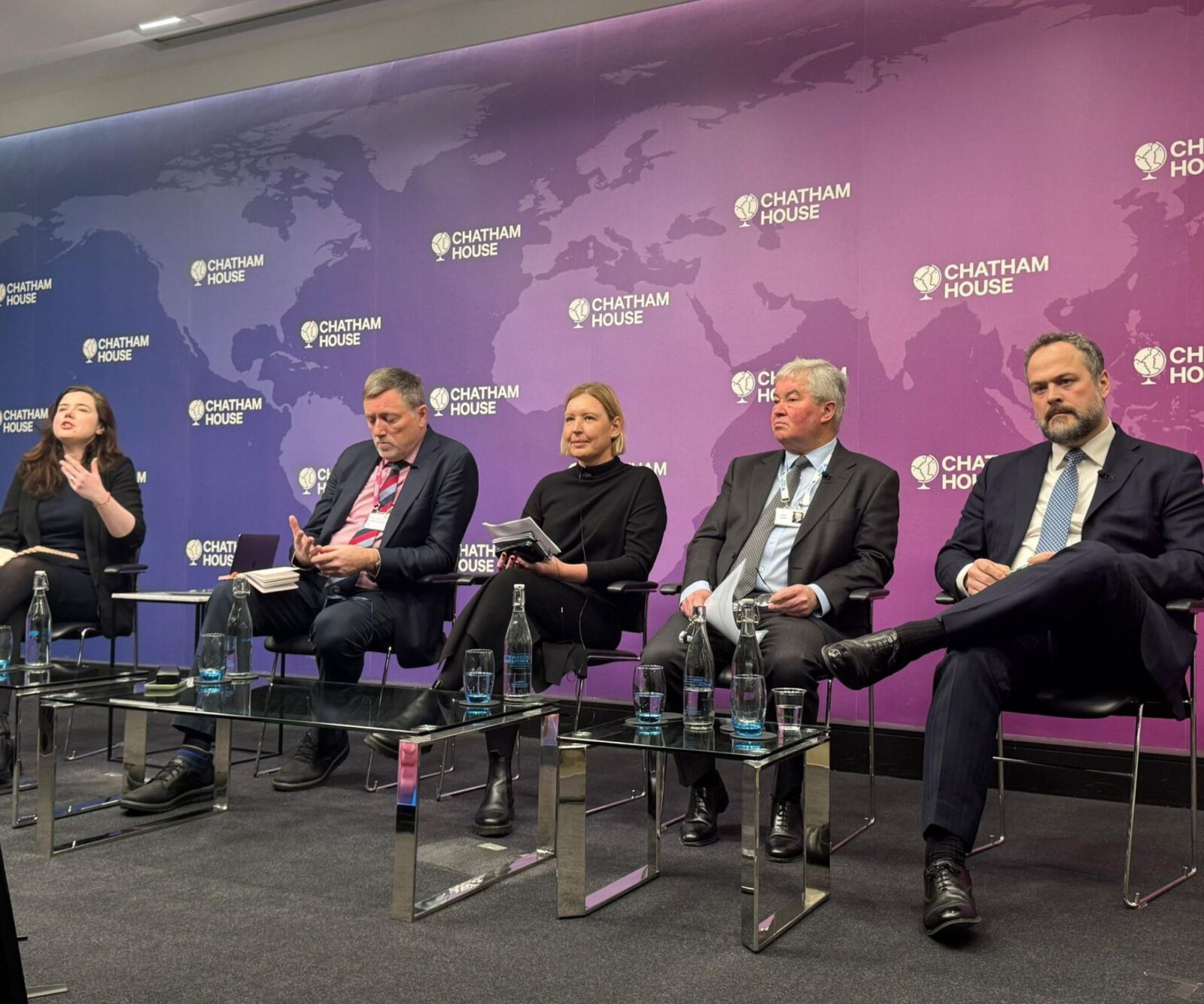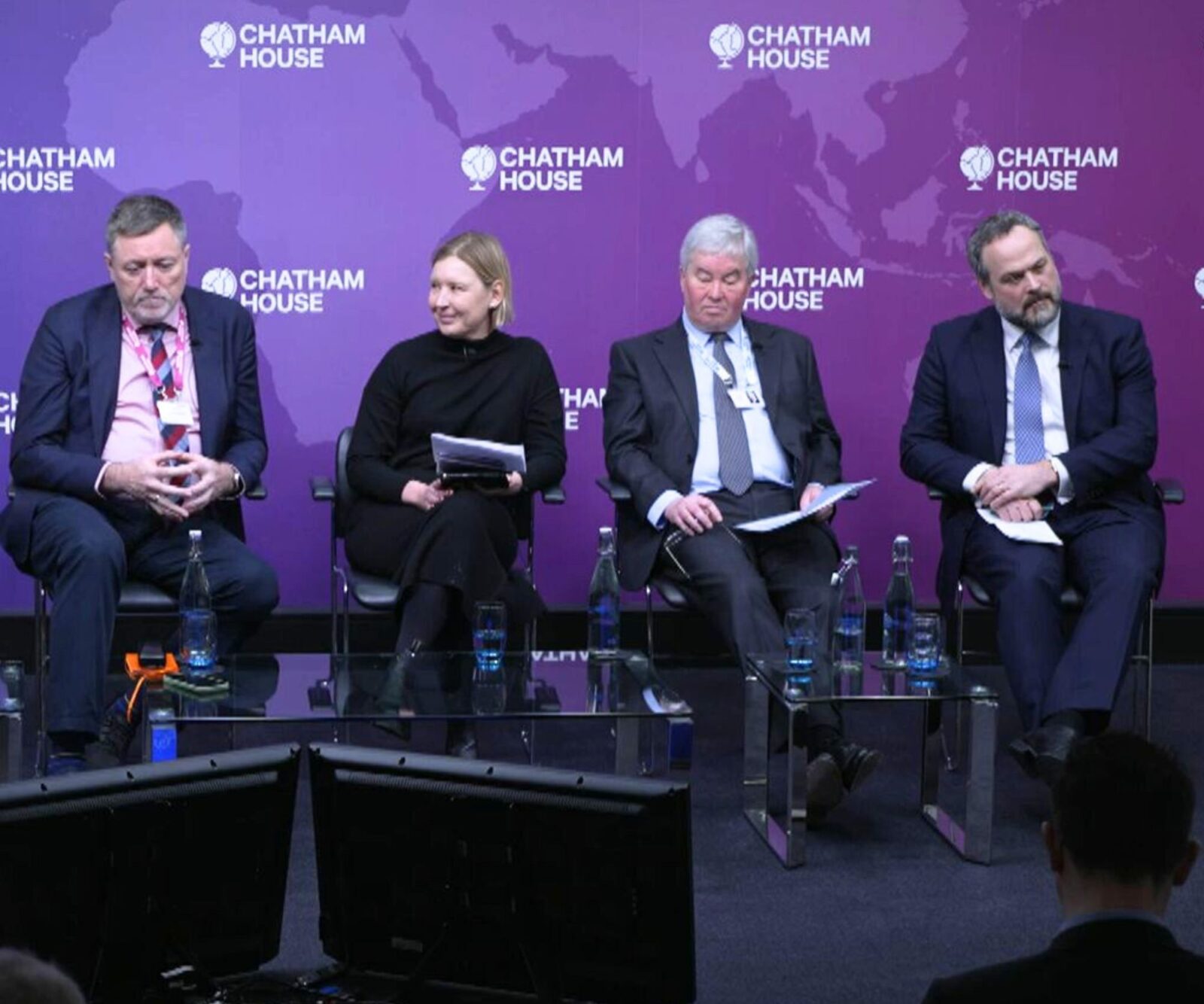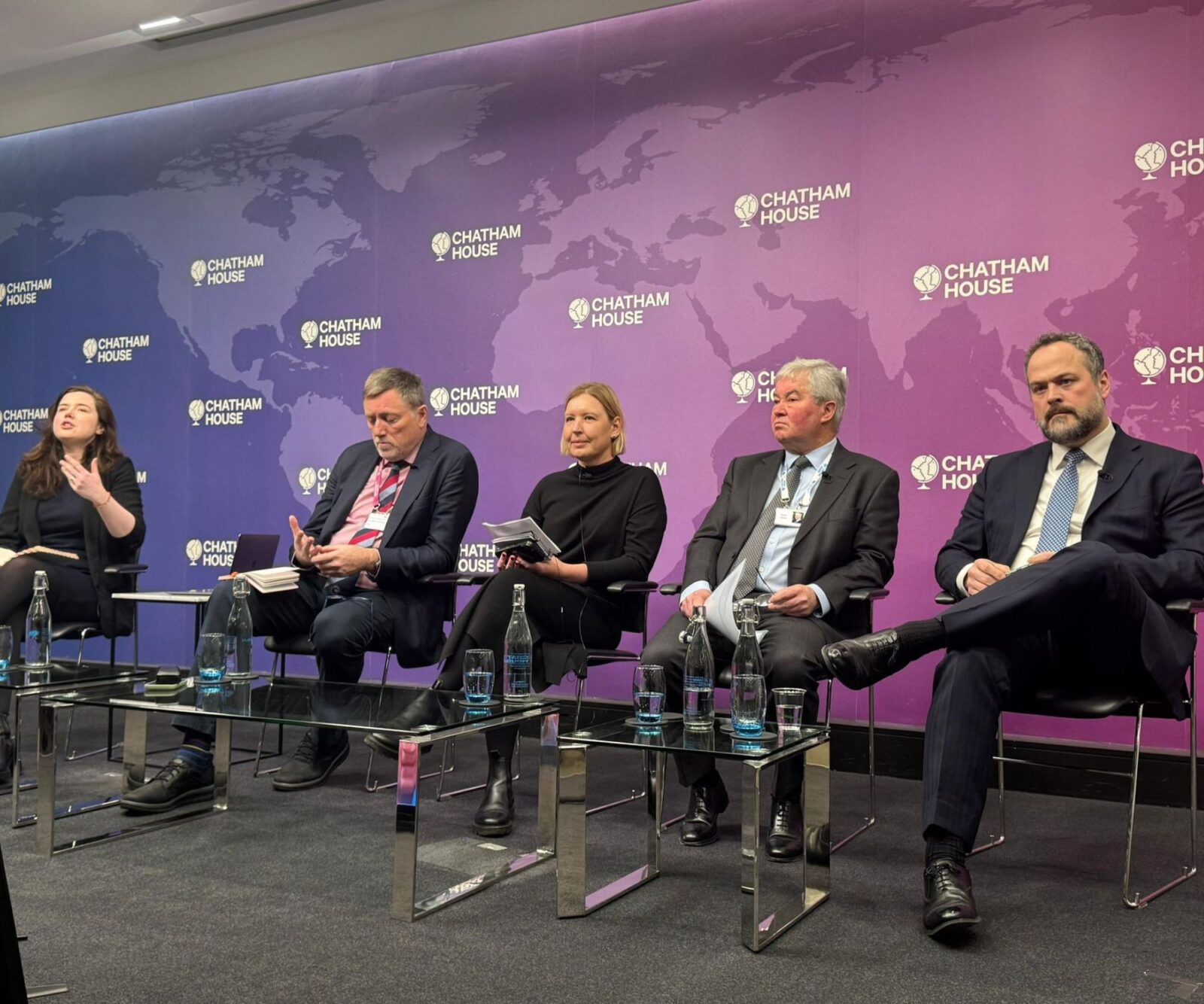
At this year’s Chatham House Security and Defence Summit, Polina Istomina, Associate Fellow at the Sahaidachnyi Security Center, joined a Plenary Session 5 – “Drones: The Defence Buzz Word” – one of the summit’s most anticipated sessions amid growing European concern about Russian aggression. While she has long worked to make Ukraine’s voice heard in British policy circles, this marked her debut appearance as a panelist at a major international forum.
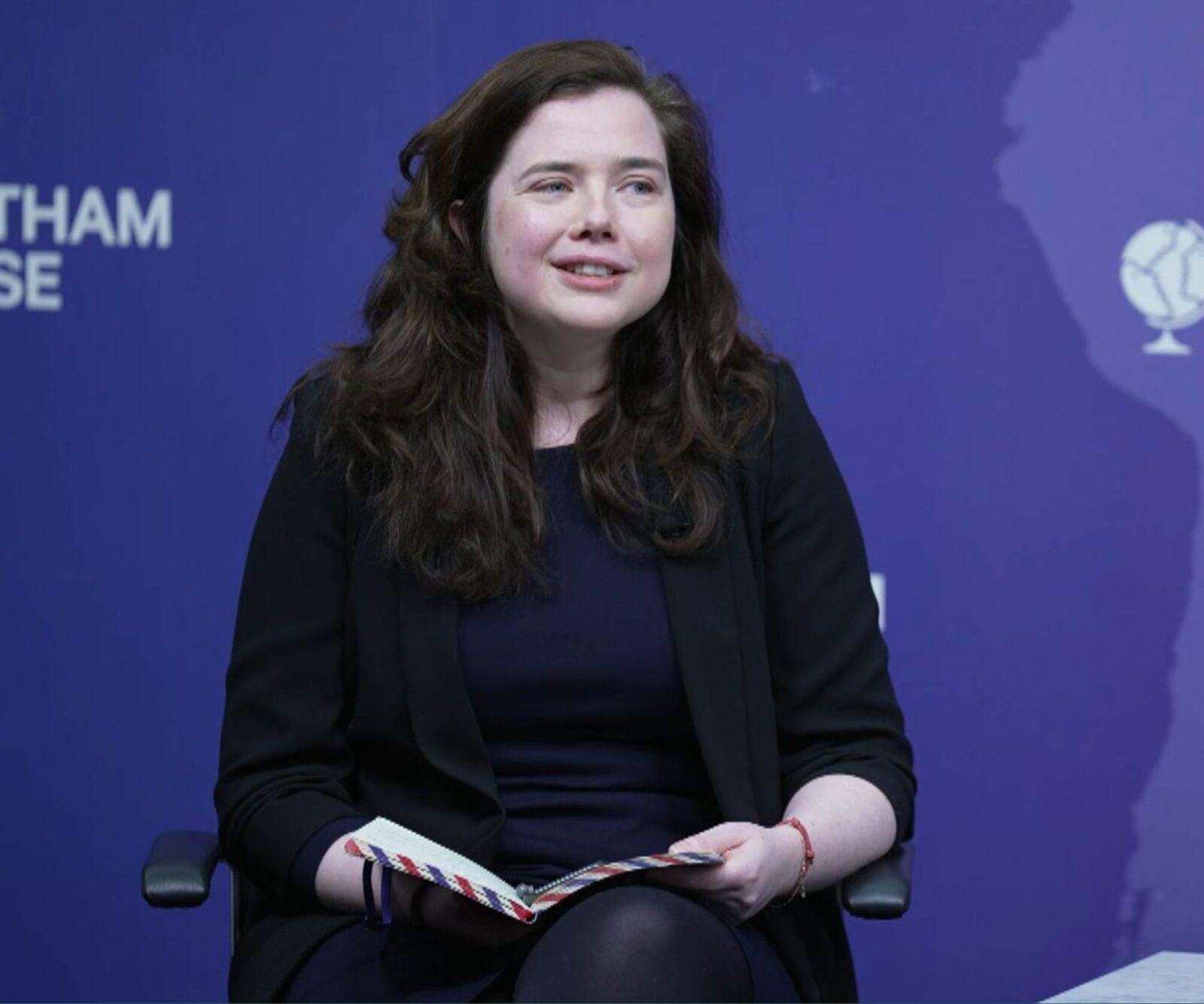
The panel, moderated by Katja Bego (Senior Research Fellow, Chatham House Europe Programme), brought together senior military, industry, and policy voices to examine how drone technology is reshaping modern warfare and what that means for European defence planning. Panelists included Air Marshal Greg Bagwell CB CBE (Distinguished Fellow, Military Sciences, RUSI), General Sir Richard Barrons KCB CBE (Senior Consulting Fellow, International Security Programme, Chatham House), and Oliver Waghorn (Business Development Director, BAE Systems Digital Intelligence). Polina Istomina represented Ukraine’s direct war experience on the panel.
Polina Istomina emphasized that most drone systems in Ukraine still run on a single pilot operating a single drone, close to the front lines because drone pilots have become among the most hunted targets on the battlefield. Fully autonomous systems remain a future concept. Where automation has made a tangible difference is in training. Drone warfare has also fundamentally redefined the battlefield with a kill zone, currently 30 kilometres deep and expanding, making medical evacuations dangerous missions and rendering the golden hour a thing of the past.
She also noted, “Time is an essential dimension in this war – development speed saves lives. We innovate on quarterly timelines and focus on what saves lives today and tomorrow.”
Much of the discussion centred on supply chains and sovereignty, whether any single country can fully supply what it needs in a prolonged conflict. Polina Istomina raised the fiber optic drone case as a pointed example: Ukraine developed the technology first, but Russia, with access to Chinese supply chains, was the one to scale it. The consequences were strategic. “Our vulnerabilities today are your vulnerabilities tomorrow,” she told the panel.
The session also covered 3D printing, supply chains and sovereignty, civil society’s role in defence, and hybrid warfare.
On the panel, Polina Istomina also mentioned the Everywhere War Tracker – the Sahaidachnyi Security Center’s interactive database of Russia’s sub-threshold operations across Europe. The tracker offers incident summaries with source links, filters by country, incident type, and date range, and an interactive map visualizing Russia’s hybrid footprint across five categories: potential military threats, sabotage acts, cyberattacks, maritime incidents, and airspace violations.
We are proud that Polina Istomina represented the Sahaidachnyi Security Center at one of Europe’s leading security forums, and grateful to Chatham House for the invitation to bring Ukraine’s perspective into this conversation. It is also worth mentioning that Polina previously supported Serhiy Prytula and Come Back Alive charitable foundations on their first advocacy visits to Great Britain, helping to bring information on Ukraine’s frontline realities and needs directly to British policymakers and the wider public.