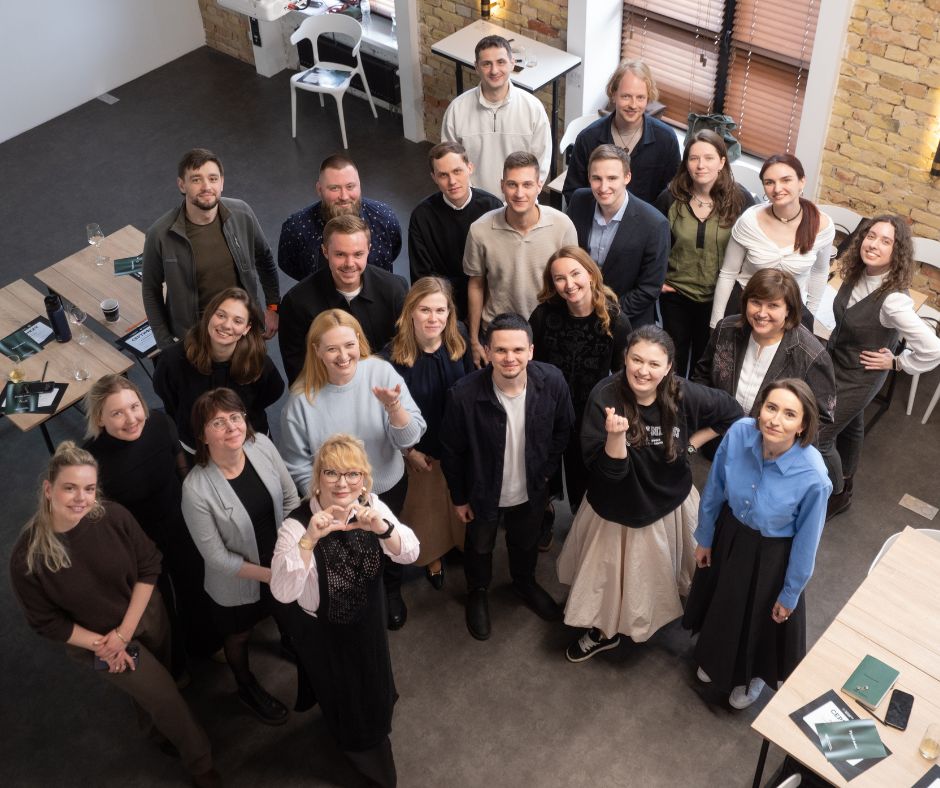
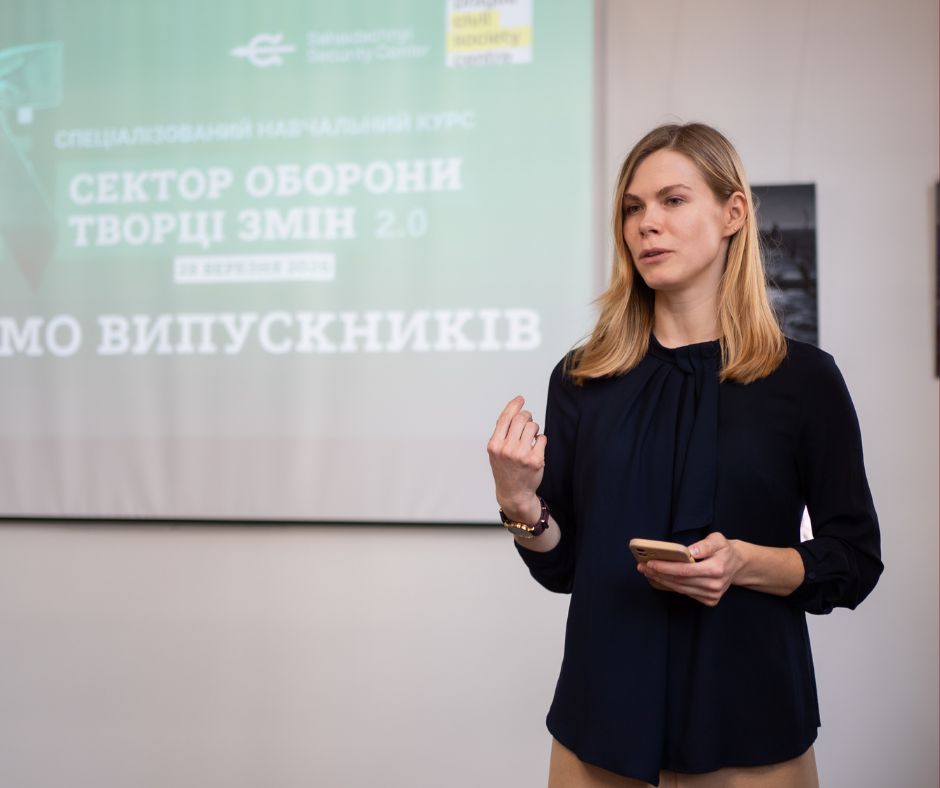
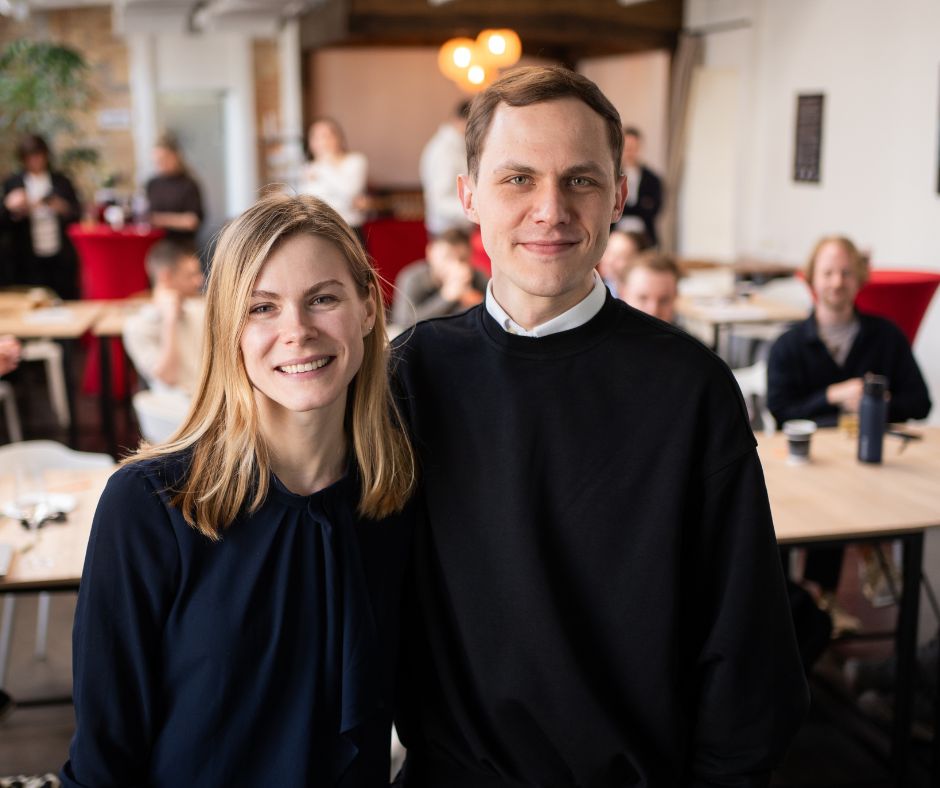
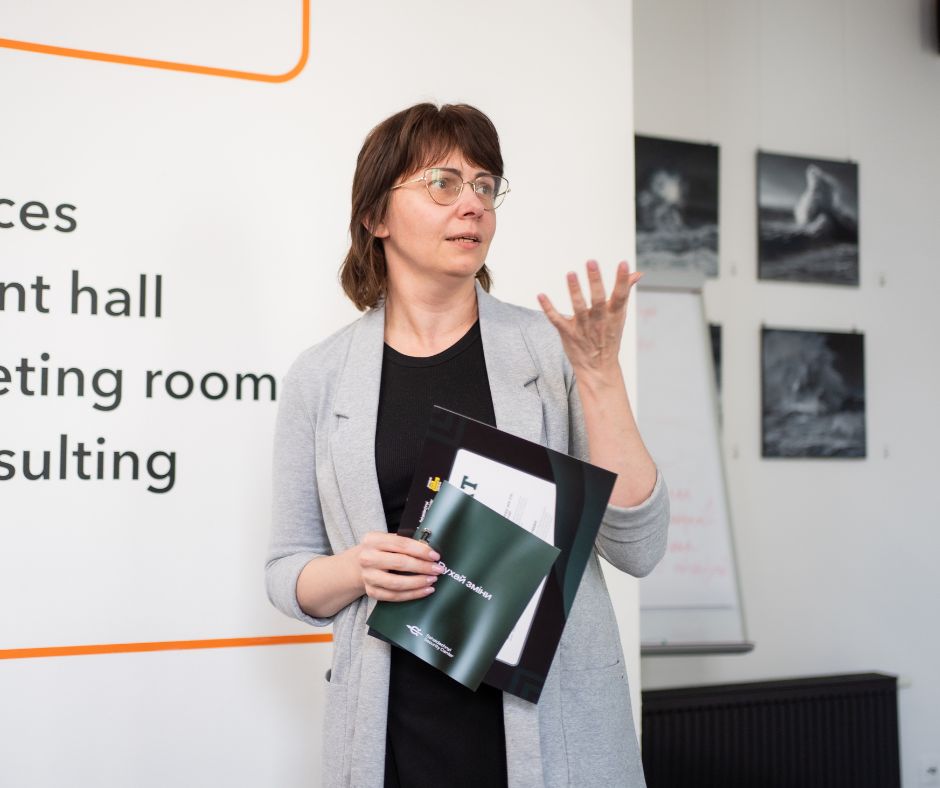
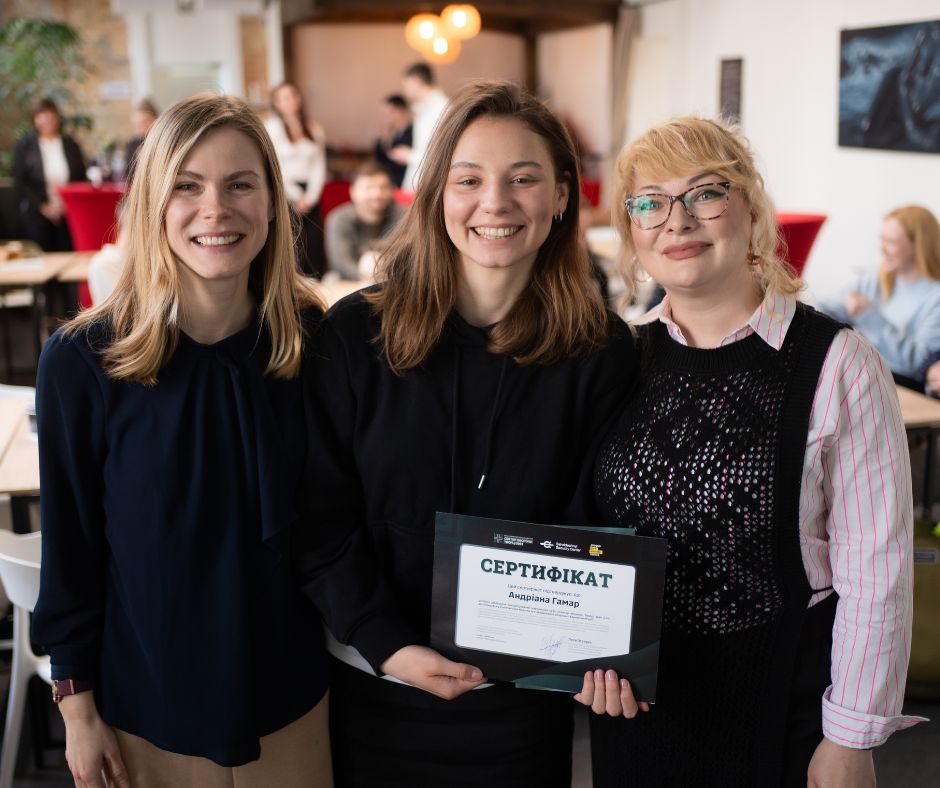
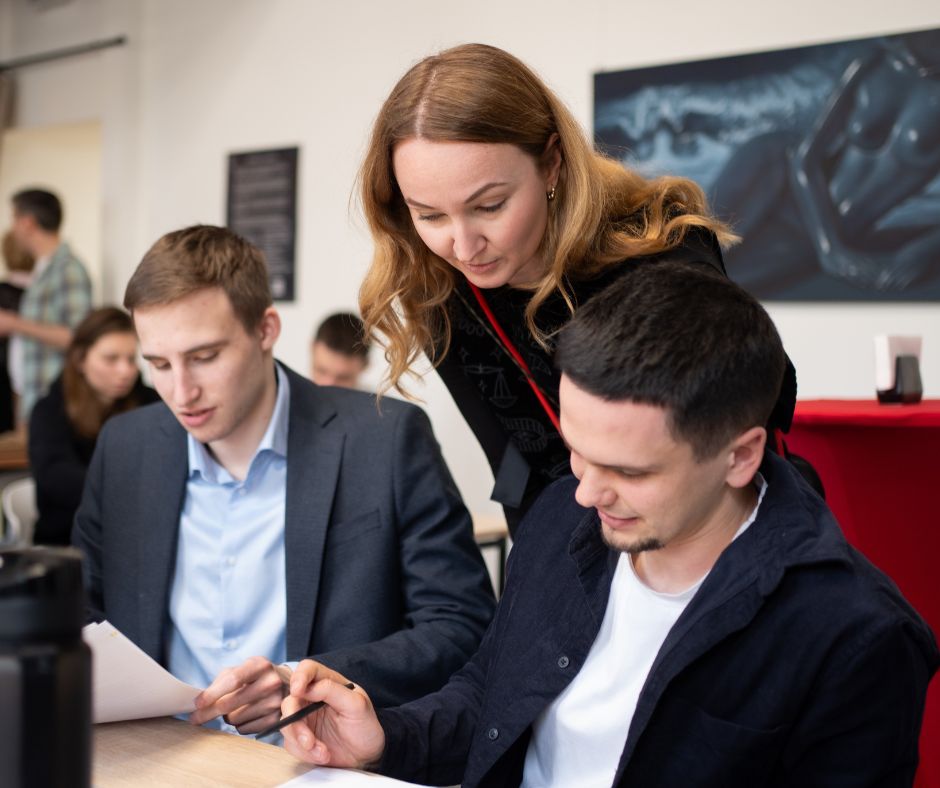
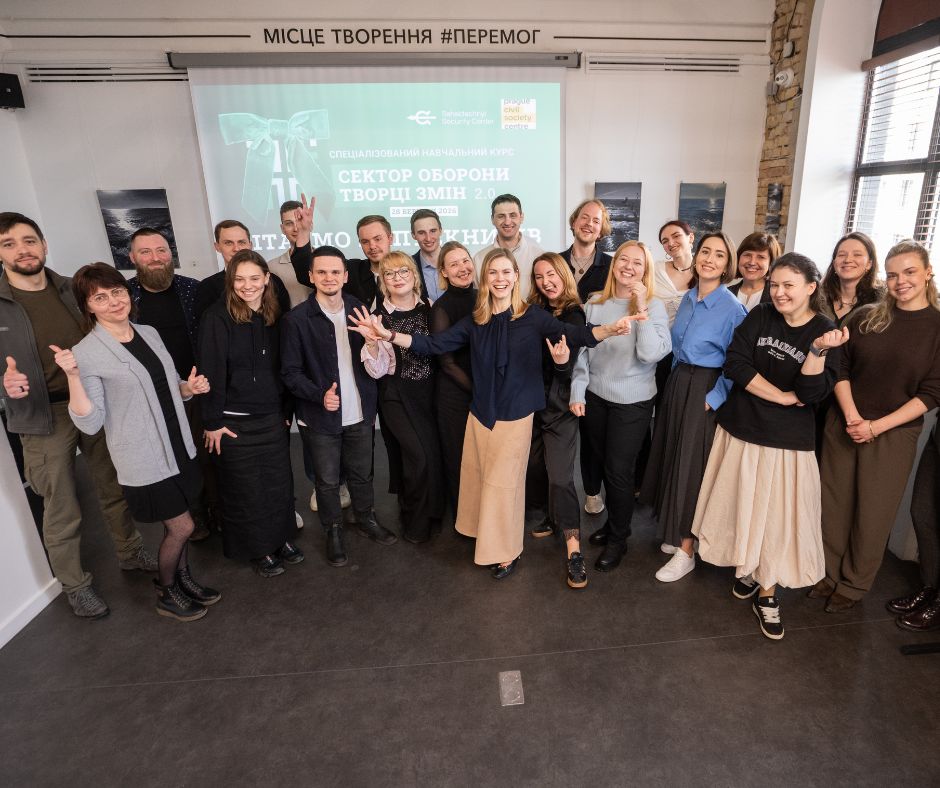
On March 28, 2026, the second cohort of the “Defense Sector. Changemakers” course completed its final session in Kyiv.
This was an intensive two-month course designed for people already working in, or moving toward, the defense sector. The second cohort brought together participants from a wide range of institutions: the Ministry of Defense of Ukraine and its Change Support Office, the Directorate of Digital Transformation, the Cabinet of Ministers Reform Office, Ukrainian civil society organizations, charitable foundations, military schools, and drone production companies.
The goal was not simply to transfer knowledge, but to build the kind of cross-sector understanding that reform in Ukraine’s defense sector requires.
Over eight modules, participants worked through the full architecture of defense sector knowledge, opening with an introduction to defense and military affairs – how modern armed forces are organized, the levels of warfare, command and control systems, and the evolution of Ukraine’s armed forces from Vladyslav Sobolevskyi.
From there, the course moved into NATO: its structure, strategic concept, command hierarchy, planning processes, and the specifics of NATO-Ukraine interoperability, covered by NATO Representation advisors Hans Helseth, Orest Babiy, and Aviar Kokka, alongside Oksana Osadcha, advisor on European and Euro-Atlantic integration.
Next modules also examined:
- the domains of warfare and hybrid threats, joint and multi-domain operations, and irregular threats (taught by: Omar Oscar Armani-Ashour, Professor of Security and Military Studies at the Doha Institute for Graduate Studies);
- defense planning and capability development, including military doctrine, and the alignment of Ukrainian doctrines with Western standards (covered by leading experts, such as Jessica Smith, Crispin Ellison, Oleksandra Azarkhina, Liudmyla Nefiodova, Oleh Huliak, and Oleksandr Tarasenko);
- governance and accountability in the defense sector: how defense policy is formed, how decisions are made under wartime conditions, and how institutions maintain resilience through reform (examined by Inna Sovsun, Ukrainian Parliament member, higher education expert);
- classical and contemporary theory of war – Clausewitz, the relationship between war, politics and money, technological revolutions in warfare, and how theory applies to what Ukraine is living through today (led by Prof. Jonathan Krause, research fellow at Hertford College, University of Oxford, and the Royal Military Academy Sandhurst);
- defense finance, procurement, and innovation – wartime budget formation, the full procurement cycle, dual-use technologies, and rapid battlefield adaptation (covered by Oleksandra Azarkhina, Viktor Maziarchuk, Oleh Blinov, and Stanislav Boiko).
The final module, on strategic leadership under threat, featured both a historical strategy simulation game “Hetmanshchyna” (by Tymur Demchuk) and a situational exercise on leadership culture and institutional accountability in the US military (by Yurii Buhai).
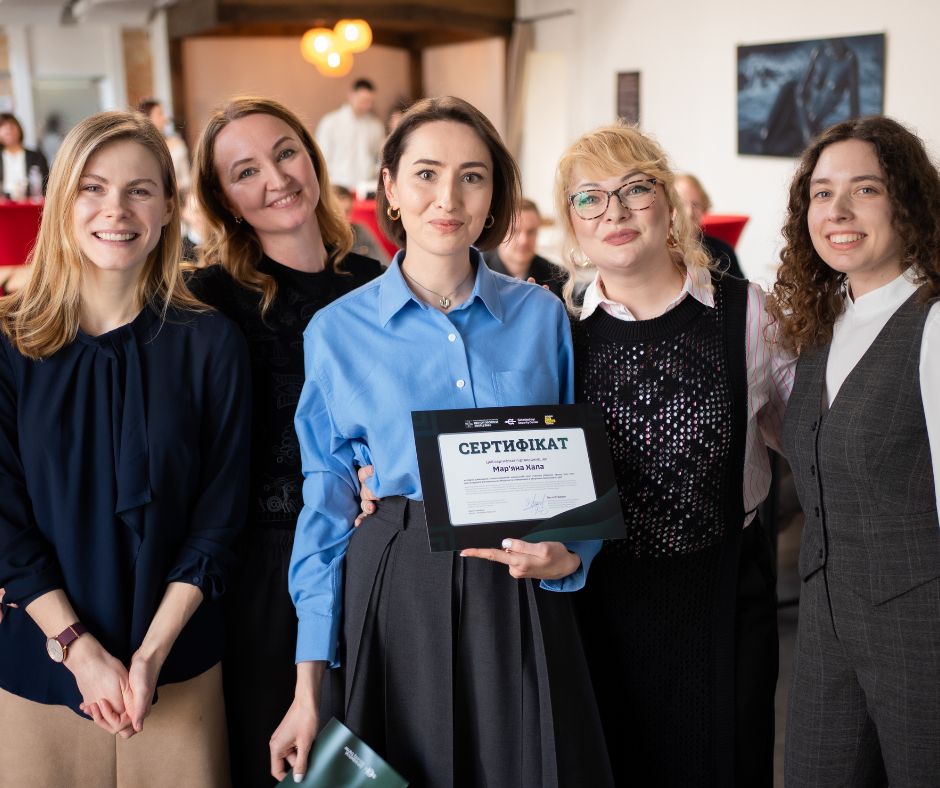
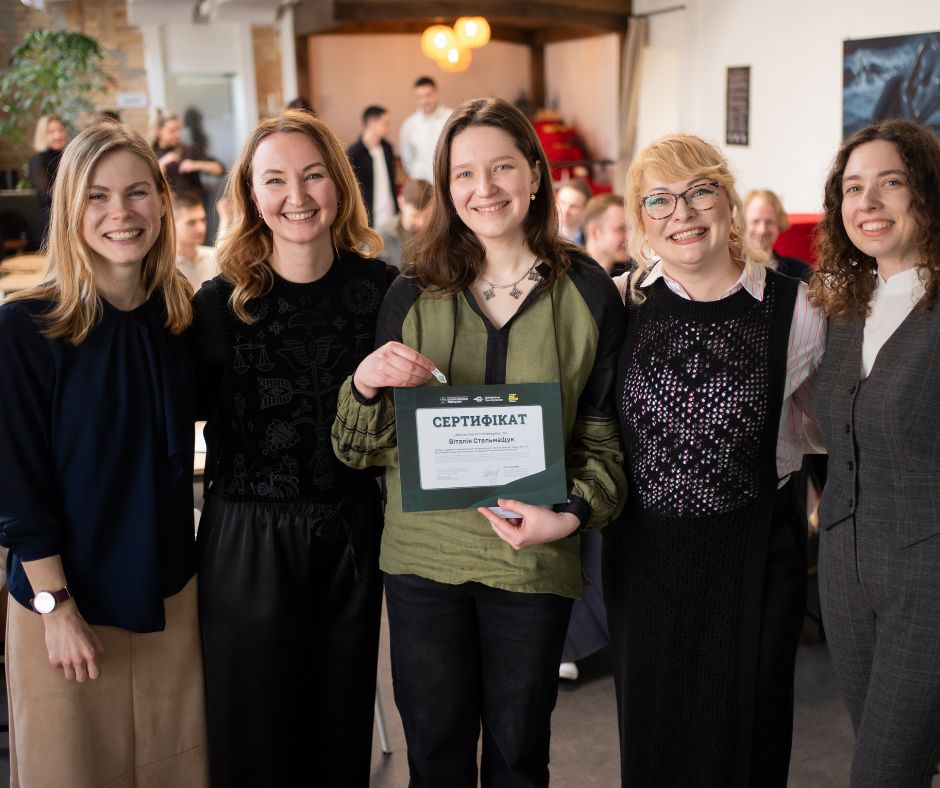
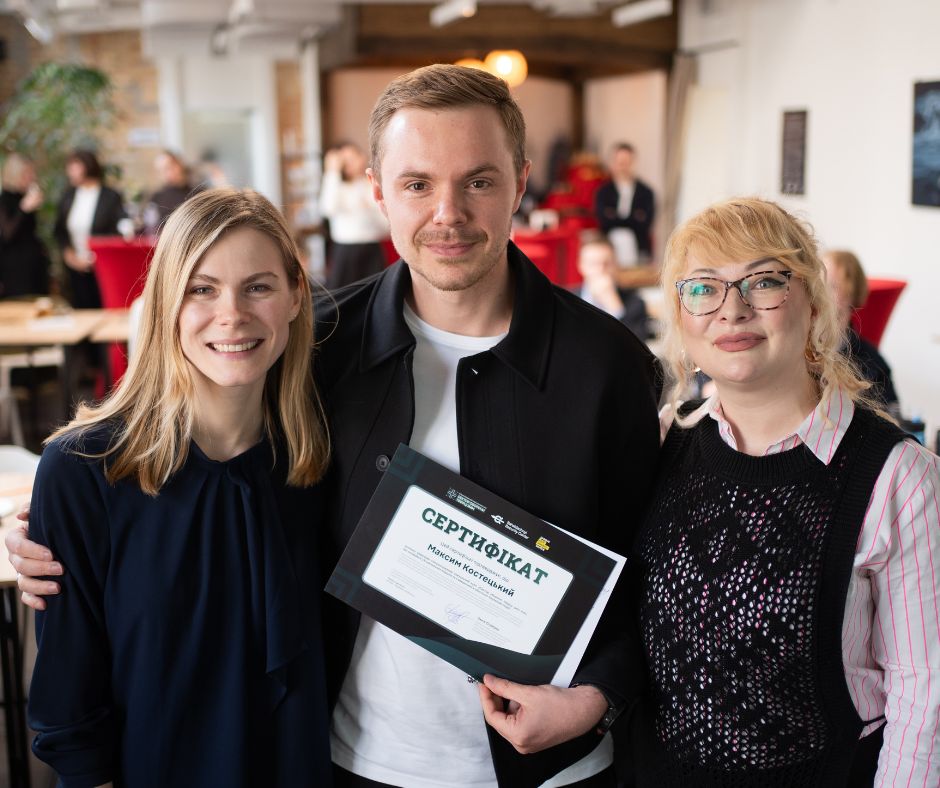
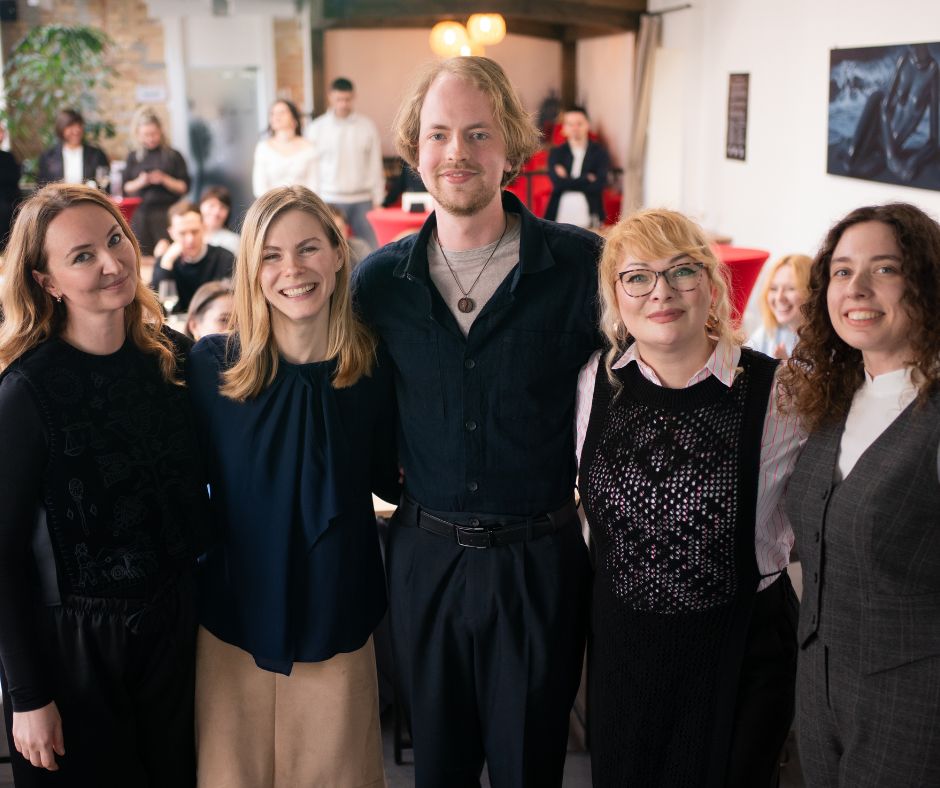
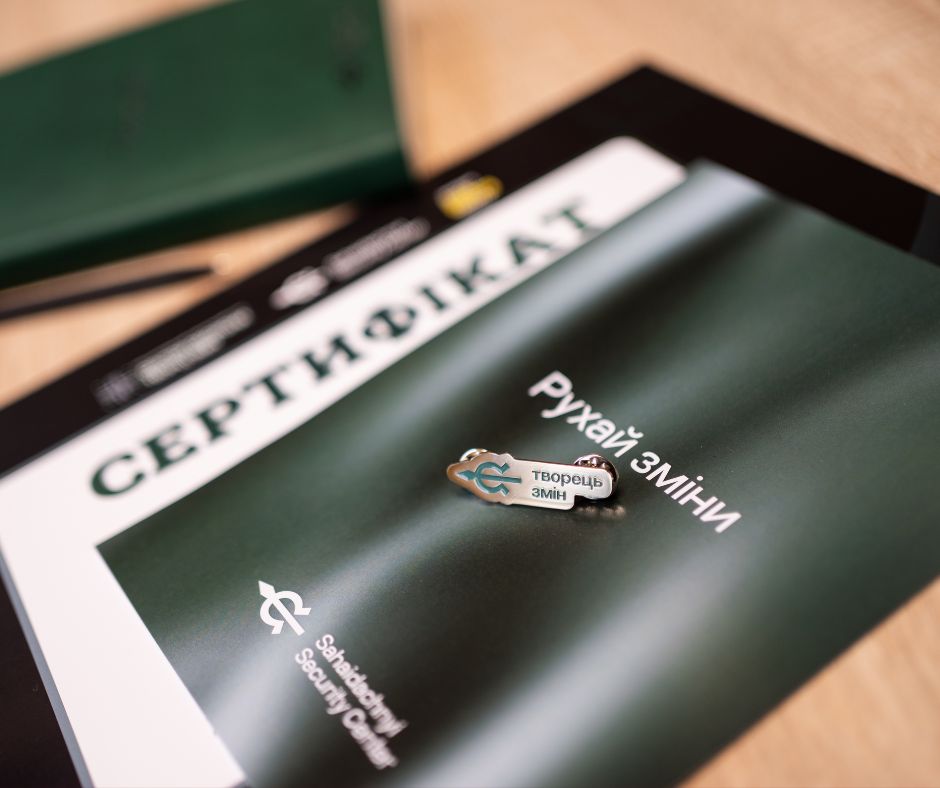
The final day closed with a graduation ceremony, marked by diploma presentations.
A few of what participants said afterward:
“The idea was to expand my systemic understanding of the sector and that request was fully met” – Inha Vyshnevska (Co-founder & Program Director of the NGO “Resilient Ukraine”).
“I came expecting to build a community of people, and that was fulfilled 100%” – Vitaliia Stelmashchuk (Head of the External Expert Group, Digital Transformation Directorate).
“I’ve gained a deeper understanding of the historical context of these processes. After the lectures, I feel motivated to explore the topics further – I read, analyze, and apply what I’ve learned”– Nazarii Nykolaichuk (Business Development Manager, OKO Camera).
“The vision for the sector has become more structured, and there is greater confidence regarding its future development” – Dmytro Kysilenko (Chief Investment Officer, IRON Cluster).
Ukraine’s defense sector is being reformed in real time, under enormous pressure. The people who understand it well enough to work across its boundaries are the ones who make reform possible. That’s what this program is for.
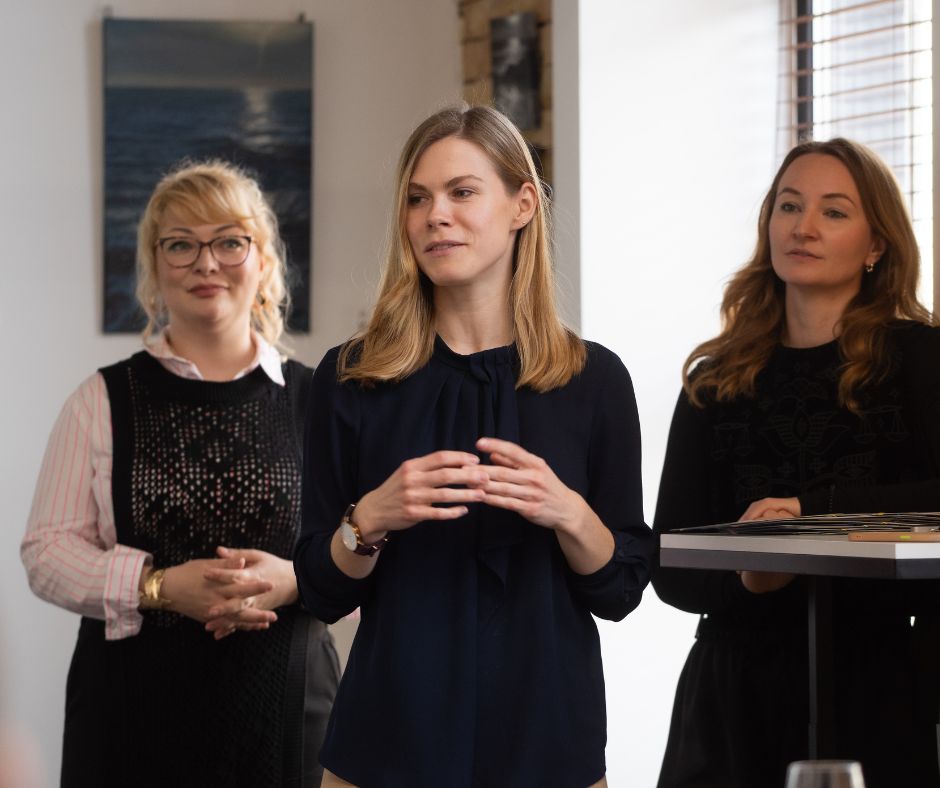
We are deeply grateful to our lecturers for bringing their knowledge and lived experience from their professional domains into the “Defense Sector. Changemakers 2.0” modules. We also thank participants for fruitful discussions and for becoming active contributors to the course.
The work doesn’t stop at graduation. Some participants are already applying what they learned in ongoing projects; others have opened new research collaborations or professional partnerships. This is exactly what we hoped for, and it tells us that the community of changemakers in Ukraine’s defense sector is growing.
👉 Head here if you’d like to be added to the list of potential participants for the next course:
https://lnkd.in/dn997yV7
👉 And here if you have questions about the course:
https://lnkd.in/dmDyQb4D